

loading

[Chih-Horng Kuo] Defensive symbiosis: Stinkbugs use fungi to shield their eggs from parasitic wasps

Stinkbugs are common agricultural pests, notorious for damaging crops and difficult to control. Chemical pesticides raise environmental concerns and face the problem of resistance, while parasitic wasps are widely used as natural biocontrol agents. In a new study, an international team of researchers has discovered a remarkable strategy in which stinkbugs form a defensive alliance with fungi, using them to physically protect their eggs from wasp parasitism.

A surprising role for the “ear” on stinkbug legs
Insects are known to evolve tympanal organs, membranous structures that function like ears to detect sound. Female stinkbugs of the family Dinidoridae were previously thought to possess such organs on their hindlegs. However, close investigation of the Japanese stinkbug Megymenum gracilicorne revealed that this enlarged structure is not for hearing at all. Instead, it is a specialized organ for housing and cultivating fungi.

The organ consists of thousands of tiny pores connected to secretory cells. In reproductive females, these pores are filled with fungal hyphae that grow outward, creating a white, fibrous covering on the hindlegs. When laying eggs, females scrape and smear the fungi onto the egg surface. Within days, the fungi spread to cover the entire egg mass.

Fungal bodyguards
Laboratory and field experiments confirmed that the fungi provide highly effective protection against parasitic wasps. Eggs without fungal covering were readily parasitized, while fungus-covered eggs were largely protected. The fungi do not attack the wasps chemically but instead act as a physical barrier, preventing the wasps from piercing the egg surface.

The fungal partners belong mainly to the Cordycipitaceae, a group that includes many insect pathogens. Yet the species carried by the stinkbugs are relatively harmless to their hosts, suggesting that the insects selectively cultivate benign strains. This discovery expands the concept of insect–microbe symbiosis, showing that microbes can also serve as external, structural protectors.

An ancient and widespread strategy
Following detailed studies of M. gracilicorne in Japan, the researchers examined other dinidorid species, including Eumenotes pacao from Okinawa, and Megymenum brevicorne, Coridius chinensis and Cyclopelta parva from Taiwan. All were found to have the same hindleg organ and the distinctive egg-smearing behavior. These findings suggest that the defensive fungal symbiosis evolved early in the Dinidoridae lineage and has been maintained across multiple species.

International collaboration
The study was led by Dr. Takema Fukatsu, Prime Senior Researcher at the National Institute of Advanced Industrial Science and Technology (AIST) in Japan, with Dr. Chih-Horng Kuo, Research Fellow at Academia Sinica in Taiwan, leading the investigation of Taiwanese stinkbugs. This work was supported by the Japan Society for the Promotion of Science (JSPS), the Japan Science and Technology Agency (JST), and Academia Sinica.

The collaboration between Japan and Taiwan enabled the researchers to combine complementary strengths. Japan provided long-term expertise in insect–microbe symbiosis, while Taiwan offered access to a rich diversity of insect species, as the island is a recognized biodiversity hot spot in East Asia. By extending the study across multiple species in both regions, the team demonstrated that the fungus-associated hindleg organ is not unique to a single species, but instead represents an ancient and widespread symbiotic strategy within stinkbugs.

The success of this project also reflects the strong and long-standing relationship between Dr. Fukatsu and Dr. Kuo, whose shared interest in symbiosis fostered an effective partnership. The collaboration was also strengthened by co-first author Dr. Masahiko Tanahashi, who moved from Japan to Taiwan and joined Dr. Kuo’s team, contributing to the success of this project.

Publication Information
Takanori Nishino, Minoru Moriyama, Hiromi Mukai, Masahiko Tanahashi, Takahiro Hosokawa, Hsin-Yi Chang, Shuji Tachikawa, Naruo Nikoh, Ryuichi Koga, Chih-Horng Kuo, Takema Fukatsu. Defensive fungal symbiosis on insect hindlegs. Science 390, 279-283 (2025). https://www.science.org/doi/full/10.1126/science.adp6699

[Na-Sheng Lin] Fibrillarin Methylates a Movement Protein to Help Satellite RNA Trafficking in Plants

RNA trafficking is crucial in almost every phase of plant development. However, the mechanisms by which plant parasites—viruses—and even the parasites of viruses—satellite  RNAs—move systemically within plants to establish infection remain poorly understood. Previously, we demonstrated that bamboo mosaic virus satellite RNA (satBaMV) traffics autonomously and systemically in a helper virus-independent but nucleolar protein (FIB)-dependent manner by forming a mobile ribonucleoprotein (RNP) complex comprising satBaMV, FIB, and satBaMV-encoded P20 movement protein. Here, we show that the arginine-rich motif (ARM) of P20 directs its nucleolar localization, enabling its interaction with FIB in the nucleolus and Cajal bodies, where FIB methylates the ARM.  The methyltransferase (MTase) activity of FIB is indispensable for the systemic movement of satBaMV. Although FIB MTase-defective mutants retain their ability to bind satBaMV in vivo, they fail to complement long-distance satBaMV transport in FIBi plants. P20 methylation not only promotes its targeting to plasmodesmata (PD) but also triggers nucleocytoplasmic shuttling of FIB together with P20 as the RNP complex to PD. A satBaMV mutant harboring a non-methylated P20, but not a methylation-mimic P20, exhibited disrupted PD targeting and impaired P20-assisted satBaMV trafficking. Our findings provide mechanistic insights into how FIB-mediated P20 methylation positively regulates systemic trafficking of a subviral agent in plants. This research was led by Dr. Na-Sheng Lin at the Institute of Plant and Microbial Biology, Academia Sinica, in collaboration with Drs. Yau-Heiu Hsu and Chung-Chi Hu from the Graduate Institute of Biotechnology, National Chung Hsing University. Drs. Chih-Hao Chang and Jiun-Da Wang contributed equally as co-first authors. The research was funded by Academia Sinica Investigator Award and published in The Plant Cell (DOI: 10.1093/plcell/koaf224).

To highlight the significance of these findings, The Plant Cell produced an accessible “In Brief” entitled  「Hitching a ride: Bamboo mosaic virus satellite RNA hijacks the methyltransferase fibrillarin for a ride across the plant」, making the study understandable to a broader audience (https://doi.org/10.1093/plcell/koaf226).

Chih-Hao Chang, Jiun-Da Wang, Shu-Chuan Lee, Yau-Heiu Hsu, Chung-Chi Hu, Na-Sheng Lin, Nucleolar fibrillarin methyltransferase regulates systemic trafficking of a plant virus satellite RNA, The Plant Cell, 2025.

2026 IPMB-SCU Graduate Program Admissions Open

Advance your future — Master with leading faculty, research strength, and scholarships

Online Registration (Link)
- Application-based admission is from 10:00, October 13, 2025 to 17:00, October 27, 2025.

- Examination-based admission is from 10:00, December 9, 2025 to 17:00, January 5, 2026.

AS-IPMB https://ipmb.sinica.edu.tw/

SCU-Dept. of Microbiology https://microbiology.scu.edu.tw/news/311

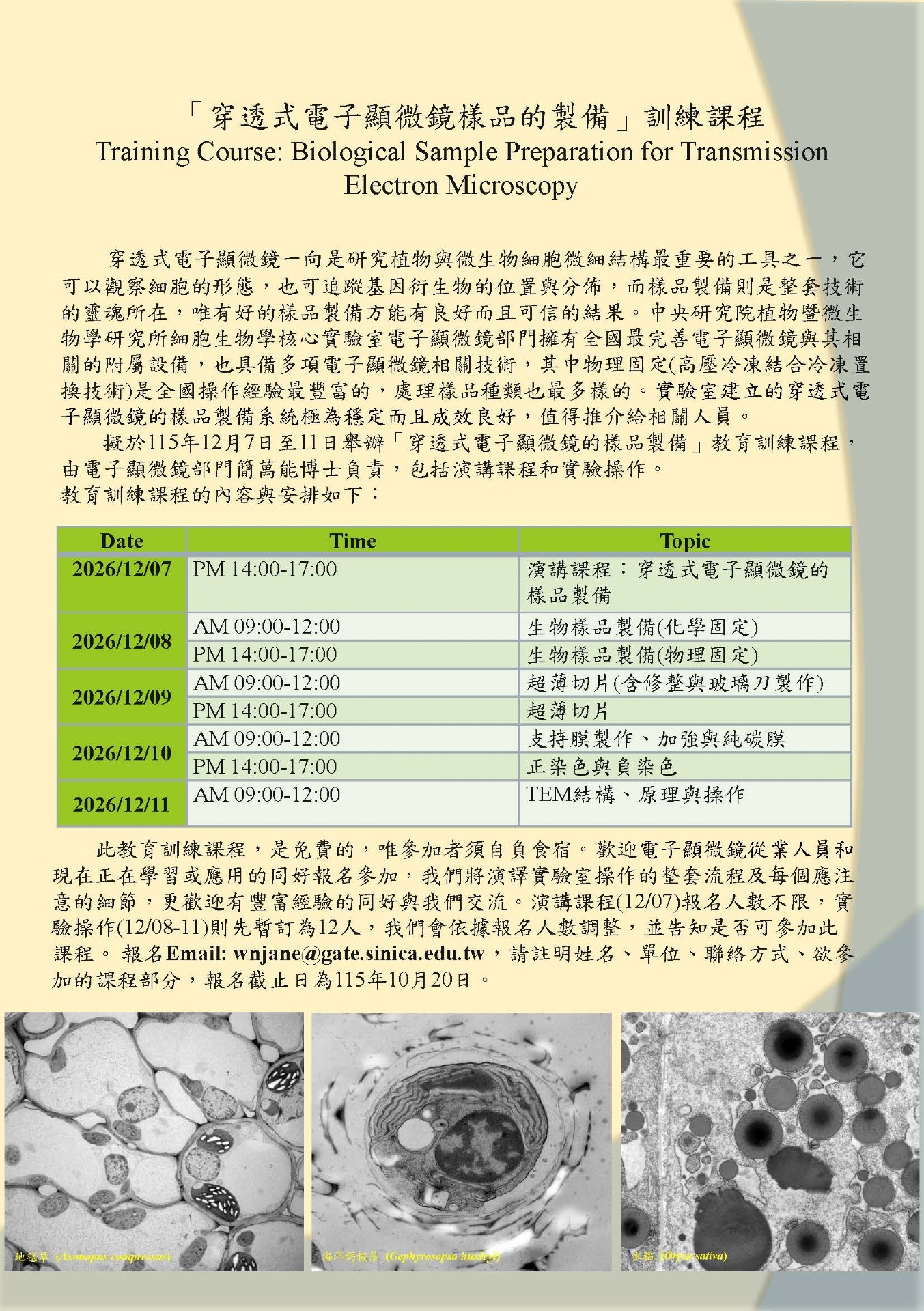
Training Course of EM Division, Cell Biology Core, IPMB

 Topic:  Biological Sample Preparation for Transmission Electron   Microscopy

 Date: 2025.12.08-12

 Place: EM Division

 Speaker: Dr. Wann-Neng Jane, Research Specialist

 Email: wnjane@gate.sinica.edu.tw

 Limit: College graduate

[Pao-Yang Chen] Analysing protein complexes in plant science: insights and limitation with AlphaFold 3

AlphaFold 3 (AF3), an artificial intelligence (AI)-based software for protein complex structure prediction, represents a significant advancement in structural biology. Its flexibility and enhanced scalability have unlocked new applications in various fields, specifically in plant science, including improving crop resilience and predicting the structures of plant-specific proteins involved in stress responses, signalling pathways, and immune responses. Comparisons with existing tools, such as ClusPro and AlphaPulldown, highlight AF3’s unique strengths in sequence-based interaction predictions and its greater adaptability to various biomolecular structures. However, limitations persist, including challenges in modelling large complexes, protein dynamics, and structures from underrepresented plant proteins with limited evolutionary data. Additionally, AF3 encounters difficulties in predicting mutation effects on protein interactions and DNA binding, which can be improved with molecular dynamics and experimental validation. This review presents an overview of AF3’s advancements, using examples in plant and fungal research, and comparisons with existing tools. It also discusses current limitations and offers perspectives on integrating molecular dynamics and experimental validation to enhance its capabilities.

This article was published in Botanical Studies with funding from Academia Sinica.

Pei-Yu Lin, Shiang-Chin Huang, Kuan-Lin Chen, Yu-Chun Huang, Chia-Yu Liao, Guan-Jun Lin, HueyTyng Lee, and Pao-Yang Chen (2025) Analysing Protein Complexes in Plant Science: Insights and limitation with AlphaFold 3. Botanical Studies, 66, 14. 

[Lay-Sun Ma] Molecular Puppeteering: Roles of Ustilago maydis Effectors.

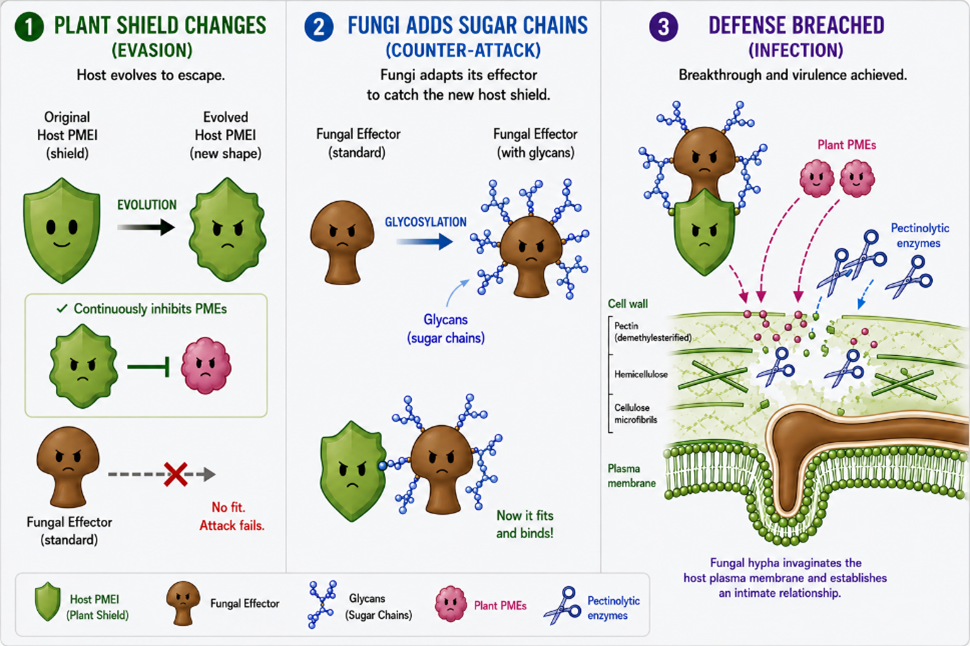
Effector proteins are central to the pathogenicity of filamentous fungi, particularly in smut fungi like Ustilago maydis, where impaired delivery of effectors into host cells results in attenuated virulence. This review outlines how U. maydis effectors function across diverse host compartments to manipulate host responses and induce tumor-like gall formation. We explore how effector studies uncover novel aspects of plant defense and highlight the evolutionary divergence between core and accessory effectors, shaped by host adaptation and selective pressure. Despite recent advances, challenges remain in characterizing poorly conserved or intrinsically disordered effectors. We emphasize the need for species-specific functional validation and improved tools, such as structural modeling, localization strategies, and maize genetic manipulation. Integrating structural and functional approaches will be essential to decipher effector mechanisms and the molecular arms race between smut fungi and their hosts, ultimately informing strategies for durable crop resistance.

Link: https://authors.elsevier.com/a/1lolZ4tPF3-bvc

[Ting-Ying Wu] TISCalling: leveraging machine learning to identify translational initiation sites in plants and viruses

The research group developed a new computational tool called TISCalling, which is designed to find and identify the start signals for protein production (translation initiation sites, or TISs) in plant and plant viral genomes.

Traditional methods for finding these sites were often limited. They struggled to identify TISs that don't begin with the usual "AUG" codon, and they couldn't locate protein-coding genes in genomes on a large and system-wide scale. They are also limited in showing us which parts of a messenger RNA (mRNA)  sequence were most important for deciding where a protein starts. TISCalling uses machine learning techniques to analyze mRNA) sequences. It was trained using data from plants and animals, making it accurate for finding TISs in a variety of species, including plants and viruses. Besides just finding the TISs, the tool also figures out which features of the mRNA sequence are important for a TIS to be recognized.  TISCalling is also user-friendly, with a web-based visualization tool and a downloadable package for scientists to use on their own data (https://predict.southerngenomics.org/TISCalling/). Overall, TISCalling is an important step forward in understanding how proteins are made and in improving the accuracy of genetic maps by uncovering previously unknown protein-coding regions. This study is a collaboration among the teams of Drs. Ting-Ying Wu in the Institute of Plant and Microbial Biology, Academia Sinica, Ming-Jung Liu in Agricultural Biotechnology Research Center (ABRC), Academia Sinica and Chia-Yi Cheng in National Taiwan University. The first author is Dr. Ming-Ren Yen, a postdoc from Ting-Ying Wu’s lab; the coauthor is Miss Ya-Ru Li, a research assistant from Ming-Jung Liu’s lab. This project was supported by the Academia Sinica Career Development Award Program and the National Science and Technology Council of Taiwan.

M.-R. Yen, Y.-R. Li, C.-Y. Cheng, T.-Y. Wu* and M.-J. Liu*. (2025) TISCalling: Leveraging Machine Learning to Identify Translational Initiation Sites in Plants and Viruses. Plant Molecular Biology, 115:102.


Recent Advances in Plant and Microbial Biology

Date: Tuesday, October 28, 2025

Venue: Room A134, Agricultural Technology Building, Academia Sinica

Registration: No registration required. Your attendance will be cordially welcome.

Organizer: Institute of Plant and Microbial Biology, Academia Sinica

[Chih-Horng Kuo/Erh-Min Lai/Chih-Hang Wu] Comparative transcriptomics reveals context- and strain-specific regulatory programs of Agrobacterium during plant colonization

Agrobacterium is widely known for its ability to transfer DNA into plant genomes, a process that forms the basis of Agrobacterium-mediated transformation (AMT), an essential tool in plant biotechnology. Most studies, however, have focused on a few model strains under laboratory conditions, leaving open questions about how diverse natural strains behave inside plants.

In this new study, researchers investigated the gene expression programs of several wild-type Agrobacterium strains and identified strain 1D1108 as particularly effective in both stable transformation in legumes and transient transformation in Nicotiana benthamiana. Using RNA-Seq, the team examined the transcriptome of 1D1108 in different environments, focusing on those related to virulence induction, including acidic pH, the chemical inducer acetosyringone, and inside the leaf tissue of Nicotiana benthamiana.

The results revealed that the plant environment triggered far more extensive gene regulation than laboratory treatments alone, with over a thousand genes specifically regulated. These included genes for bacterial attachment, secretion systems, and nutrient uptake, highlighting a complex and integrated response to host cues. Comparisons with other Agrobacterium strains showed little overlap in gene expression, underscoring how regulatory programs are both context-dependent and highly strain-specific.

To broaden the perspective, the team also compared Agrobacterium with Pseudomonas syringae, another plant pathogen. Both activated their specialized secretion systems inside plants, but their overall gene expression patterns were distinct, reflecting different ecological strategies.

Together, these findings demonstrate that studying Agrobacterium in real plant contexts and incorporating diverse strains is essential to capture its full biology and improve transformation efficiency. This approach not only overcomes the limitations of artificial conditions and model strains but also opens new opportunities for future applications.

This study is a collaboration among the teams of Drs. Chih-Hong Kuo, Erh-Min Lai, and Chih-Hang Wu in the Institute of Plant and Microbial Biology, Academia Sinica. The first author Dr. Yu Wu was a doctoral student in the Taiwan International Graduate Program on Molecular and Biological Agricultural Science (TIGP-MBAS). The co-author Ms. Hsing-Yi Chang is a research assistant supervised by Dr. Kuo. This project was supported by Academia Sinica Grand Challenge Program and the National Science and Technology Council of Taiwan.

Wu Y, Chang HY, Wu CH, Lai EM*, Kuo CH* (2025) Comparative transcriptomics reveals context- and strain-specific regulatory programs of Agrobacterium during plant colonization. Microbial Genomics 11:001485.

[Guang-Yuh Jauh] HYCCIN2 is essential for recruiting the SH3P2-DRP1A complex to the cell plate in Arabidopsis embryos

Cell division is a fundamental process essential for cellular proliferation. In plants, the formation of the cell plate—a structure unique to plant cytokinesis—differs markedly from mechanisms in animal cells due to the presence of a rigid cell wall. This process requires dynamic reorganization of the cytoskeleton and the targeted delivery of Golgi-derived vesicles, which collectively facilitate the construction of the new cell plate that separates the mother cell into two daughter cells. Although the structural aspects of plant cell division are well characterized, the molecular mechanisms that govern cytokinesis remain incompletely understood.

In a recent study by Hsu et al. from Dr. Guang-Yuh Jauh’s laboratory, HYCCIN2 (HYC2) was identified as a cytoskeletal crosslinking protein that localizes to the developing cell plate and contributes to both cell plate formation and phosphatidylinositol 4-phosphate (PI4P) production. Through genetic analysis and protein–protein interaction assays, the authors demonstrated that HYC2 associates with two known cytokinesis regulators, DRP1A and SH3P2. In hyc2/- mutant embryos, the localization of DRP1A and SH3P2 at the cell plate is impaired, accompanied by defective cell division during Arabidopsis embryogenesis. These findings reveal a critical role for HYC2 in orchestrating the recruitment of DRP1A and SH3P2 to the cell plate, thereby promoting proper cytokinesis and supporting normal embryo development in plants (Hsu et al., New Phytologist, 2025).

Hsu YW, Juan CT, Guo CL, Wang HJ, Jauh GY. HYCCIN2 is essential for recruiting the SH3P2-DRP1A complex to the cell plate in Arabidopsis embryos. New Phytol. 2025 Jul 4. doi: 10.1111/nph.70367. Epub ahead of print. PMID: 40616256.

Popular Science more