[Shu-Hsing Wu] Tunable Phosphorylation of RPS6A Refines Light-Driven Seedling Development
POST: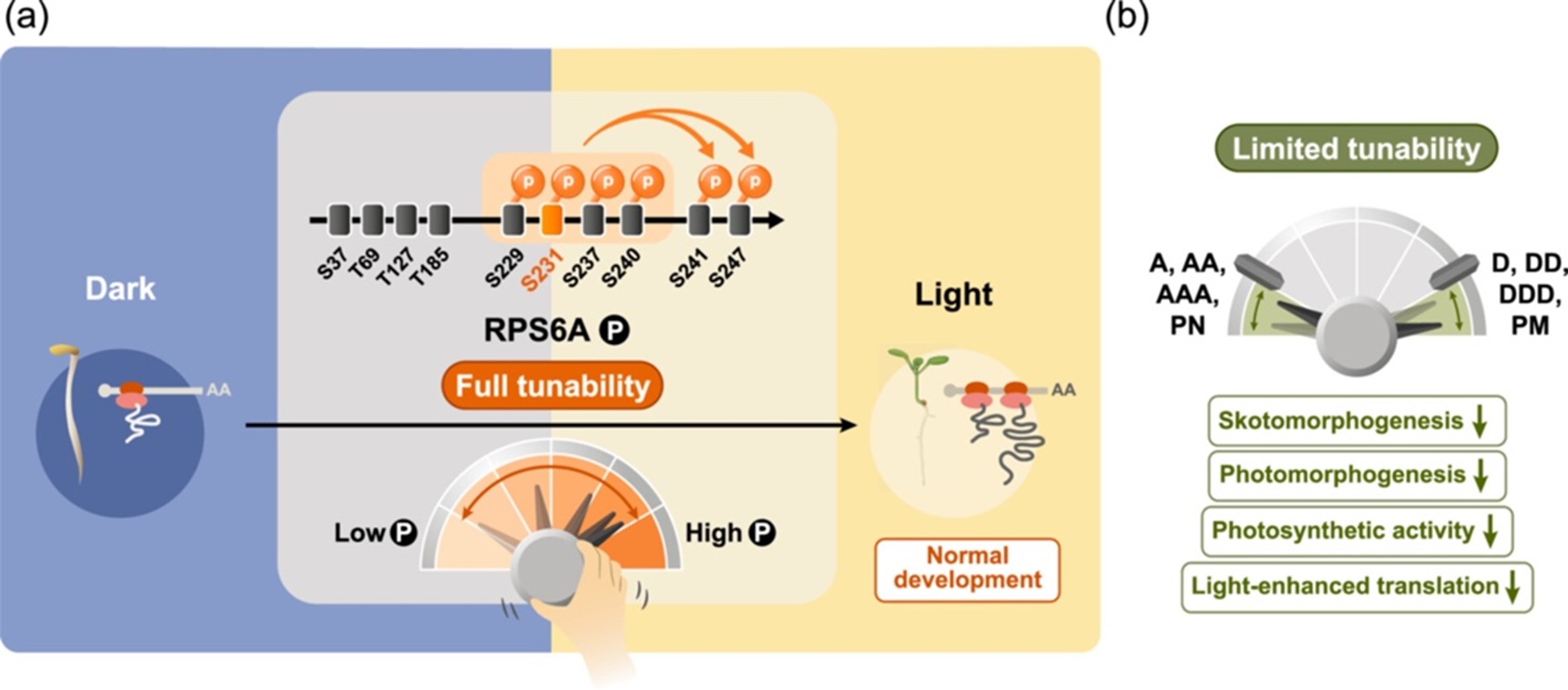
Light serves not only as an energy source for photosynthesis but also as a critical environmental cue that directs plant development. Upon light exposure, young seedlings grown in darkness must rapidly switch from skotomorphogenesis to photomorphogenesis to establish photosynthetic competence. This transition requires precise molecular regulation, particularly at the level of protein synthesis (translation), to ensure successful early seedling development.
Dr. Shu-Hsing Wu’s team revealed that phosphorylation of multiple residues in ribosomal protein S6A (RPS6A) functions as a fully tunable regulatory module rather than a simple on/off switch for light-regulated translation activation. Dynamic regulation of RPS6A phosphorylation by light is essential for timely cotyledon opening, enhanced translational capacity, and the establishment of photosynthetic capacity in Arabidopsis seedlings. These findings uncover a new layer of translational control by light signals and demonstrate how dynamic ribosomal protein modification ensures robust seedling development in response to changing environmental conditions (Cho et al., Plant, Cell & Environment, 2026).