[Na-Sheng Lin] Bamboo mosaic virus-induced metabolic reprogramming engages mitochondrial function to regulate redox homeostasis and defense responses in Nicotiana benthamiana
POST: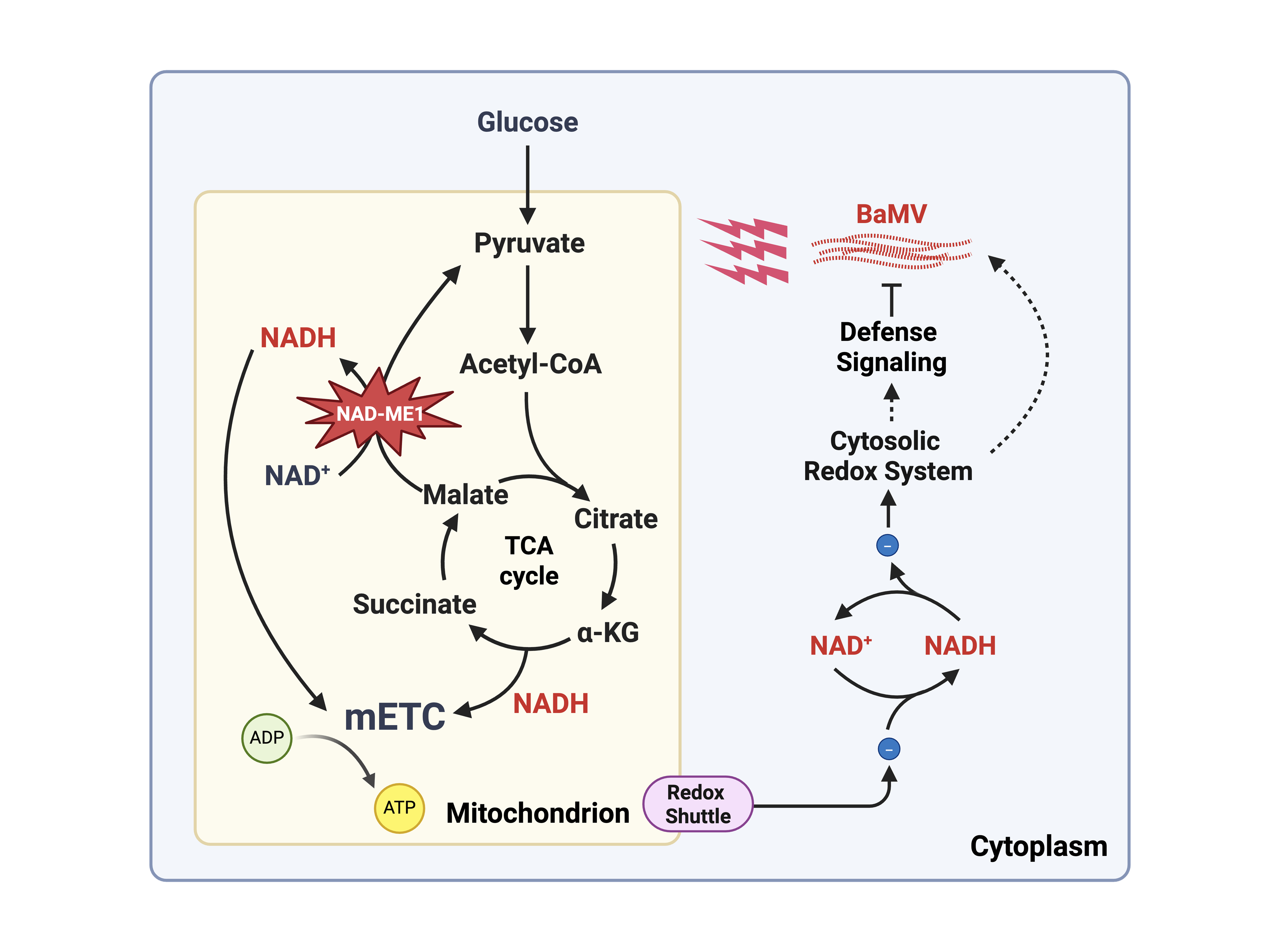
When plants are infected by viruses, they often reprogram their internal metabolism to meet the demands of both defense and stress adaptation. In this study, we investigated how Nicotiana benthamiana responds to infection by Bamboo mosaic virus (BaMV) through changes in energy metabolism and redox regulation. Using integrated metabolomics, flux analysis, and proteomics, we found that BaMV infection enhances glycolysis and mitochondrial activity, while also activating a key metabolic enzyme called NAD-malic enzyme 1 (NAD-ME1). This enzyme helps modulate cellular redox balance and influences the expression of immune-related genes. When NAD-ME1 was silenced, plants accumulated more viral progenies and showed altered defense gene expression, suggesting that NAD-ME1 plays a dual role—supporting mitochondrial metabolism and contributing to antiviral defense. Together, our findings reveal a central role for NAD-ME1 in linking metabolic reprogramming to immune responses, highlighting how plants coordinate energy and redox pathways to deal with viral threats.
This research was supported by Academia Sinica Investigator Award led by Dr. Na-Sheng Lin with Chih-Hang Wu as co-PI. The study was primarily conducted by the first author Dr. Liang-Yu Hou, and the results were published in BMC Plant Biology.