[Ka-Wai Ma] How a Scented Hormone Shapes the Plant Microbiome
POST: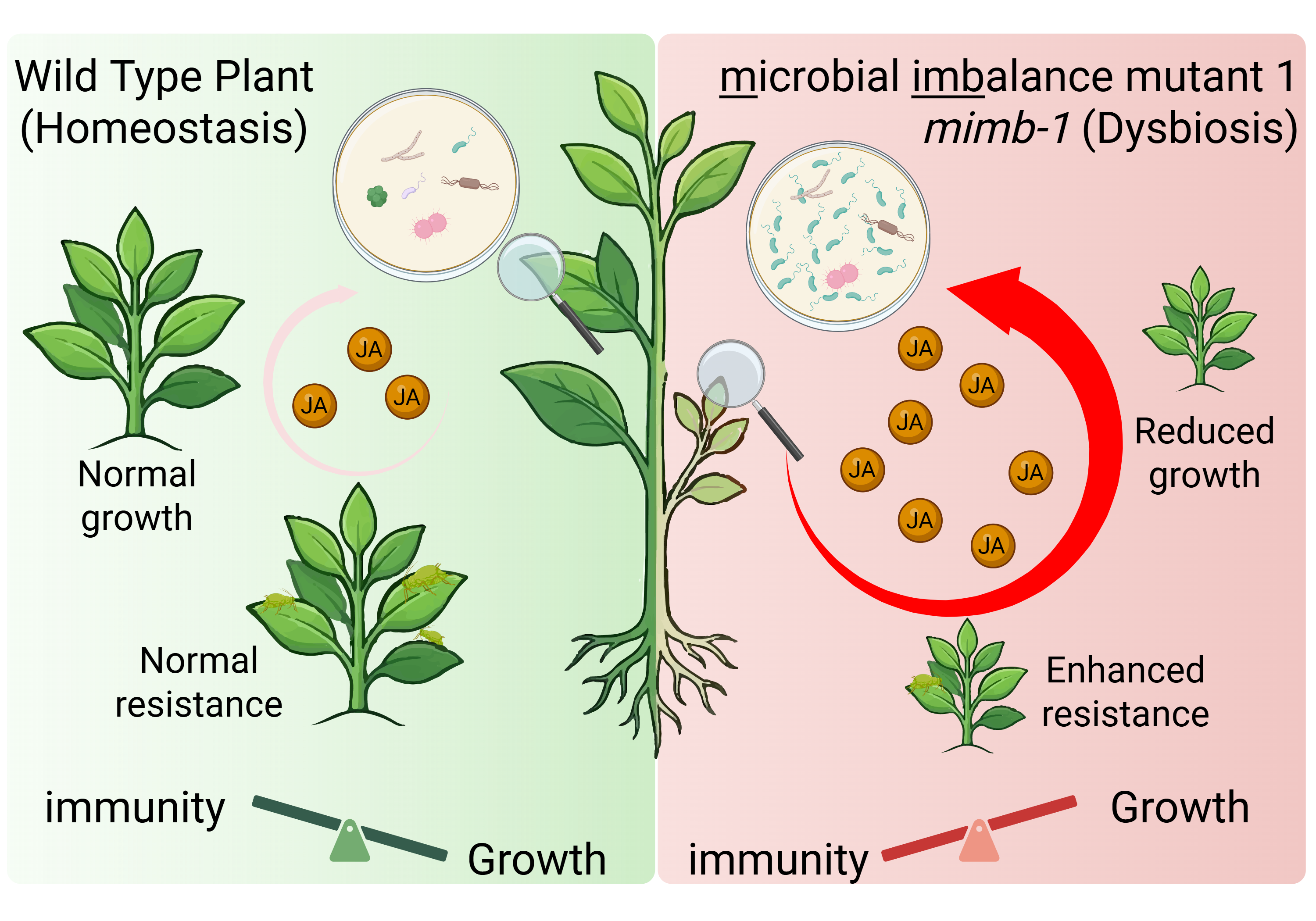
A schematic model how an upregulation of the jasmonate pathway affects plant microbiota interaction. Enhanced jasmonate signaling (right panel) results in microbial imbalance and overgrowth, forming a positive feedback loop (indicated by the red arrow) to fuel more jasmonate production. Due to the upregulation of the jasmonate pathway, plants are more resistant to pathogens like herbivore pests at the expense of reduced plant growth.
Just like humans relying on a normal gut microbiome for digestion and health, plants depend on a healthy microbiome for daily functions. But what happens when the delicate dialogue between plant hosts and their microbial partners breaks down?
In a recent study published in The ISME Journal, the laboratory of Ka-Wai Ma from the Institute of Plant and Microbial Biology (IPMB) uncovered how a critical plant hormone regulates plant-microbiome interactions.
Imagine walking past the flower market carrying a bunch of jasmine plants, you instantly catch the sweet, distinct fragrance. In fact, the compounds responsible for that scent are close chemical relatives of Jasmonoyl-L-isoleucine (JA-Ile). In plants, JA-Ile is an active form of hormone that balances growth and defense. When a caterpillar takes a bite, the plant jasmonic acid pathway will be activated to mobilize appropriate defenses to fend off herbivores. Usually, this energy-demanding defense system stay tightly in check under normal conditions to balance between growth and defense.
To understand the dynamics of this balance, the research group screened the model plant, Arabidopsis thaliana, for mutants with altered microbiome compositions. They identified a mutant that became severely stunted in the presence of the microbiome. The team soon realized that the plant's microbial community had gone awry, reaching up to 10 times higher microbial load than normal (imagine fitting 10 times Taipei's population into the same city limits). By analyzing gene expression and hormone levels, the team discovered the underlying engine driving this breakdown is an amplified positive feedback loop. When microbes colonized the plant, they naturally triggered a slight rise in jasmonic acid levels. In this mutant, however, the response became hyperactive: heightened jasmonate signaling caused the microbiome to overproliferate, which in turn drove jasmonate levels even higher.
Because this mutant had its jasmonate pathway being rewired in a hyperactive mode, the team further tested how it affects real-world problems. By forcing the jasmonate pathway into an overdrive, the plant boosted defenses against insects and certain pathogens, but paid a steep price: severely stunted growth. This study highlights a fundamental challenge in plant biology, which is the difficulty to uncouple the trade-off between growth and defense.
Why does that matter to us? As modern agriculture seeks sustainable solutions, strategically tuning plant hormone pathways alongside beneficial microbes, with a combination of chemicals ranging from fertilizers to pesticides, could provide a pathway to boost crop yields and stress tolerance without sacrificing health.
“Our research demonstrates that managing plant immunity is not simply a matter of turning defense signals "on" or "off". Hormones like jasmonic acid act as a dial that control how plants interact with their microbiome. Unraveling these feedback loops allows us to devise strategies to potentially uncouple the growth-defense trade-off and harness the microbiome for beneficial agricultural services.”
This research was supported by NSTC. First authors of this study: Tung-Tse Lu and Miguelito Isip are research assistant and PhD candidate in the laboratory of Ka-Wai Ma, respectively.